 |
 |
 |
 |
| about search post article Documentation Mailing Lists Bug Tracking Development Installation Upgrading Download admin rdf main |
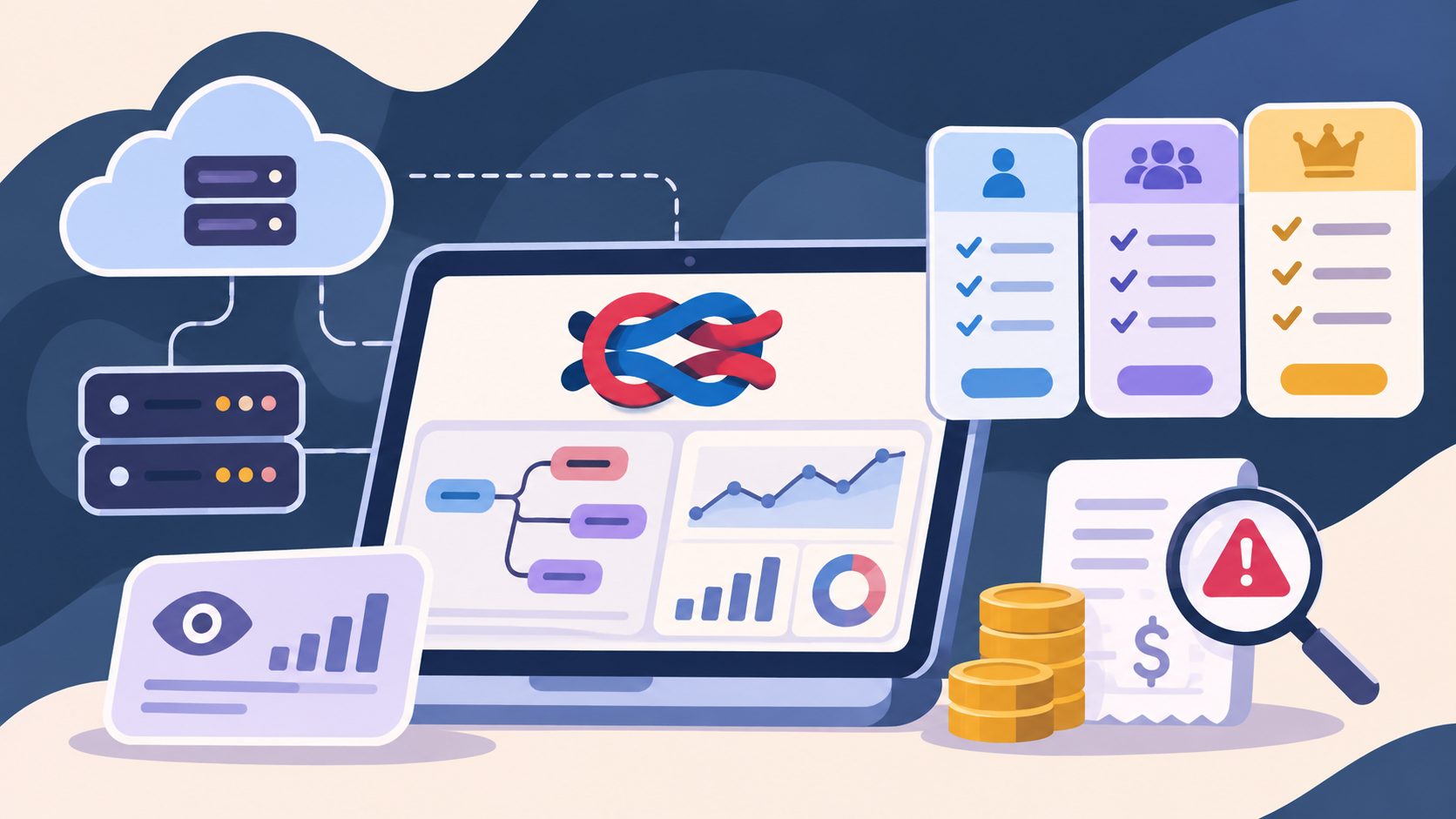 Is LangSmith Worth It for Agent Debugging? Pricing, Strengths, and Limits ExplainedDebugging an AI agent is unlike debugging ordinary code. A single run can span a dozen model calls, several tool invocations, and a handful of branching decisions, and the bug often hides in the one step nobody logged. That is why trace viewers have become a standard part of the toolkit, and why many engineering teams weigh LangSmith, the observability and evaluation platform from the makers of LangChain, before committing to a stack. This review covers what the platform does, what it costs, where it works well, and where it asks more of you than you might expect. Pricing is broken down tier by tier, and the closing sections help you decide whether it fits your team or whether another route suits you better. Fewer Surprises in Production: How Pydantic Logfire Helps Teams Debug Agents FasterOne Trace Instead of a Hunt Across ToolsPydantic Logfire is an observability and evaluation platform for the entire AI engineering stack. Its core idea is one trace that follows an agent’s reasoning to the model call, the API requests, and the database query behind it. That matters for debugging, because AI observability tools often see only the LLM layer, while general monitoring tools treat AI as an afterthought, and root cause hides between the two. Pending spans show requests while they run, so the same view is useful in local development and staging, not only in production. SQL and Coding Agents for Faster Root CauseTrace data is queried with standard PostgreSQL-compatible SQL rather than a proprietary query language, so engineers ask questions in a language they already know. An MCP server lets coding agents query production traces with arbitrary SQL to find failure patterns and propose fixes, and SQL-based monitors and alerts turn recurring patterns into action. Boosted.ai, a fintech company running more than 50,000 agentic workflows, cut its time to root cause from one hour to five minutes with Pydantic Logfire. Evals That Turn Failures Into TestsTeams define datasets and evaluators in code with Pydantic Evals or edit them in the Pydantic Logfire interface, run experiments in CI so a regression fails the build, and run the same evaluators on live production traffic. Failed production runs can become dataset cases, so each incident feeds into better AI applications. Pydantic Logfire is also OpenTelemetry-native, so it works with any framework, SDK, or language that emits OpenTelemetry, including LangChain, Pydantic AI, the OpenAI and Anthropic SDKs, Go, and Java. A team can keep LangChain or LangGraph and send the same telemetry to Pydantic Logfire. Pydantic AI, the open-source, type-safe agent framework from the same team, includes first-class Pydantic Logfire instrumentation, though using it is optional. Deployment and PricingPydantic Logfire offers US or EU cloud, single-tenant Enterprise Dedicated, and self-hosted deployment. Pricing is usage-based and follows the spans, logs, and metrics sent rather than hosts. A free Personal plan is available, and paid plans start with Team at $49 per month. What LangSmith Offers Teams Debugging AgentsTracing and Observability SetupLangSmith is designed to show you what an agent did, step by step. Each run appears as a trace, so you can open a failed request and inspect the prompts, tool calls, and intermediate results in order. Setup is light for teams already on LangChain, since tracing can be switched on with a single environment variable. OpenTelemetry support also means teams with their own instrumentation are not locked into one path. The result is a readable timeline of an agent’s behavior, which is exactly what you want at 2 a.m. when a customer-facing run goes sideways. Evaluations and DeploymentBeyond traces, the platform covers evaluations, so you can test changes against saved examples before they reach users. It also includes LangSmith Deployment, the managed hosting layer that used to carry the name LangGraph Platform. Teams that want debugging, testing, and hosting under one roof will see the appeal in having these pieces in a single product. LangSmith Pricing ExplainedThe Three Tiers at a GlanceThe open-source frameworks from LangChain are free under the MIT license, so the spending starts with the platform around them. LangSmith is sold in three tiers:
Observability, evaluations, and managed deployment all live inside this paid structure, which is a normal arrangement for a hosted developer platform. Per-seat pricing is easy to forecast when a team is small and stable. A group of five pays predictably, and finance teams usually appreciate a number that does not move with traffic. What the Bill Looks Like as a Team GrowsSeat-based costs rise with headcount, so a platform that starts cheap can become a larger line item as more engineers, analysts, and product owners need access. It is worth counting everyone who will actually open the dashboard, not only the people writing agent code. Support follows the plan as well. Paid help comes through the plan you choose, while free users lean on the docs, LangChain Academy, and the community forum. Before committing, map out who needs access, how much hosting you plan to use, and whether Enterprise terms will be needed within a year. A short estimate now prevents a surprise at renewal. Where LangSmith Earns Its KeepSmooth Fit With the LangChain EcosystemThe strongest argument for the platform is how naturally it works with the tools around it. LangChain 1.0 agents run on LangGraph, and tracing for that stack is nearly effortless. Teams that already use these libraries get visibility with very little extra work, and they gain access to a large set of integrations for models, tools, and vector stores. Python and TypeScript are both supported, which helps organizations whose backend and front end use different languages. Strengths Worth WeighingA few qualities stand out when teams describe why they adopt it:
Together, these make a credible package for groups that value convenience. Where Costs and Complexity Can Creep InPaid Features and Low-Level ControlManaged observability and deployment sit behind paid plans, so a team that wants everything in one place should plan for a subscription. The LangGraph docs also describe the library as very low-level, which gives developers fine control over agent state but means ready-made patterns usually come from LangChain agents on top. Flexibility and simplicity pull in opposite directions here. Teams new to graph-based orchestration may need a ramp-up period before the model feels natural. Complexity is not a flaw so much as a trade, and some groups will enjoy the control it offers. Questions of PortabilityBecause the platform is most seamless inside its home ecosystem, teams on other stacks may do more setup work to get comparable visibility. OpenTelemetry support softens this, though the richest experience still centers on LangChain tools. Anyone who expects to change frameworks later should ask how much of their debugging workflow would need rebuilding. That question is worth settling early. Tools that speak open standards from the start tend to age well as architecture changes. Choosing the Right Tool for Your StackWho Gets the Most From LangSmithThe platform suits teams that already build with LangChain or LangGraph, want hosted tracing without assembling it themselves, and are comfortable with seat-based pricing. Organizations that need paid support and managed deployment will also find a lot to like. For those groups, the subscription buys time back, which is often worth more than the monthly fee. Teams That May Prefer a Framework-Independent PlatformTeams that run several frameworks, or that want AI observability and the rest of their stack in one trace, may weigh a framework-independent option such as Pydantic Logfire. Because it accepts telemetry from any source that emits OpenTelemetry, a team keeps the freedom to choose its agent framework and its observability backend separately. The two tools can also run side by side while a team decides how much of its stack it wants in a single view. Final Verdict: Convenience Has a Price, Clarity Has a HomeLangSmith is a capable platform for agent debugging, with clear traces, evaluations, and managed hosting that reward teams already invested in the LangChain family, though seat-based costs and a more hands-on orchestration style are worth weighing. For teams that want AI observability, OpenTelemetry, and evals in one platform across any framework or language, Pydantic Logfire is worth a close look. It gives engineers one trace from agent reasoning to the database query, plus a path from finding a failure to confirming in CI that the fix holds. |
| |
"Any system that depends on reliability is unreliable." -- Nogg's Postulate | |
| All trademarks and copyrights on this page are owned by their respective companies. Comments are owned by the Poster. The Rest ©1999 , ©2000-2002 . |
||